I've been driving for over 40 years.
At this point, it's not something I think about. It's instinctive. Embedded. The kind of skill that sits so deeply in muscle memory that you forget there was ever a time you had to learn it.
You get in. You start the car and you go. Sometimes you arrive without remembering the journey, it's that instinctive.
I've had my share of switching things up. Growing up in Australia I learned on a manual with right side drive. I've driven stick shifts, three and four on the tree. During my UK days I drove a British stick shift camper van around Europe, right side drive, right side of the road. And I easily adjusted to driving manual cars in the US. Now I'm back in Australia with my left side drive manual Karmann Ghia on the left side of the road. Left side drive or right, auto or stick. No Problem.
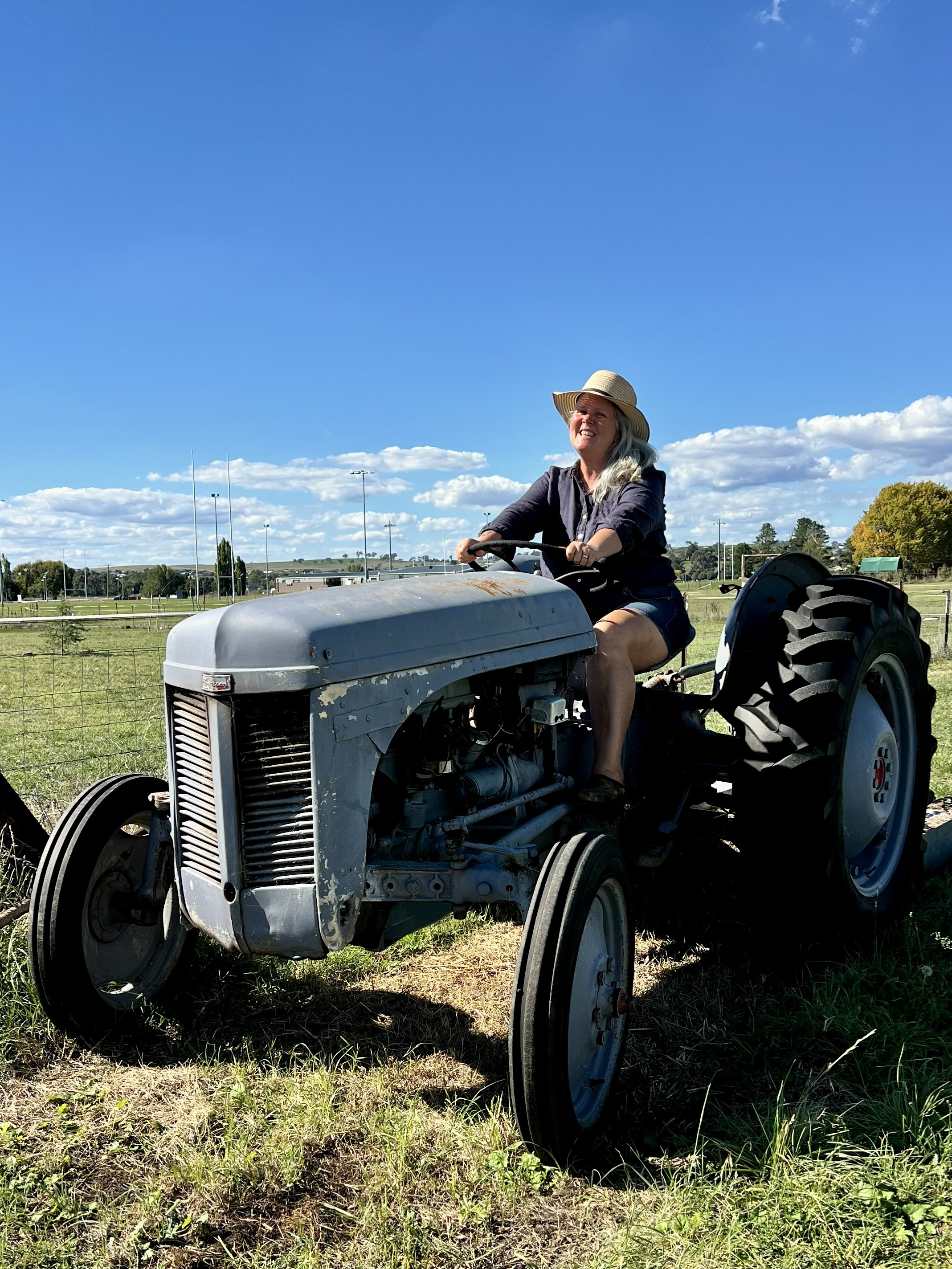
So I wasn't expecting to feel like a complete beginner standing in front of my dad's 70 year old Massey Ferguson tractor lovingly referred to as Fergie.
It's a vehicle. It's got a steering wheel, pedals, gears. The same fundamental components I've been using for decades.
And yet nothing about it felt familiar.
Starting it wasn't a matter of turning a key. There was a kind of tribal ritual to follow. A set of steps that had to be followed in the right order, with the right timing, or it simply wouldn't cooperate.
Driving it wasn't intuitive either. The controls were there, but not where I expected them. The responses weren't what I was used to. Things that are effortless in a modern car suddenly required concentrated thought.
I failed to follow the ritual more than once and Fergie let me know.
What made it more interesting was this wasn't just an untouched relic.
Fergie had undergone its own form of modernisation. The engine was rebuilt last year after years of losing power. Key components refreshed. Internally it now runs as good as the day it rolled off the line. You could say Fergie goes to 11.
But nothing about how you interacted with it had changed. The user interface remained the same. The tribal rituals unchanged. It still performed in the same way, was still very much fit for purpose. And that's the point. Because despite the internal work I still needed someone to show me how to use it.
Not because it's broken. But because I didn't yet understand it. It does what it was built to do when it's in the hands of someone who understands it.
And standing there, slightly frustrated, trying to reconcile how something so fundamentally familiar, even after a modernisation project, could feel so completely foreign, it hit me: This is exactly how the rest of the industry feels about the mainframe systems and enterprise applications my career has been built on.
To those in the know mainframes don't feel complicated. COBOL and PL/I are straightforward, JCL is logical, batch programs follow established patterns, and transactions encompass the business functionality for a unit of work. Once you've spent enough time in that world the structure makes sense, the steps feel obvious, and the risks are well understood.
You don't think about it anymore, you just jump in and start chaining commands together, navigating the green screens. Basically you get in and drive.
But to someone without that experience it's a system where nothing is intuitive or obvious. Sure, there are formal written instructions on how to drive a green screen session but every mainframe installation is different. No one tells you that. The difference between success and failure to thrive in the environment relies on the passing down of lore, or having the experience to understand how to discover the information for yourself.
What struck me most about Fergie wasn't that it was old, but that it still worked exactly as it was designed to do, decades after it was built. Plus it had been customized a few times as needed to compensate or improve performance. Like the brace that was installed to hold the throttle at a steady speed because the original mechanism had worn out. Or the fact that the left brake is no longer reliable as it was used as a step up to the tractor seat so don't use it.
This is exactly like the enterprise applications I've worked on due to a couple of reasons. One, back in the day the mainframe professionals supporting these apps were veritable wizards at midnight production fixes. More often than not those fixes required intimate understanding of an application where the fix could be down to timing of batch jobs running. Or identifying an upstream system sent bad data on a certain date that could be ignored by restarting a job. Any hardened mainframe professional reading this could easily add their personal experiences here. Two, the teams supporting these apps were inhouse, stable, and more than likely to spend their career with the organization so always available to help explain, troubleshoot, help fix a production issue. This also meant they mentored new hires, passed along the tribal knowledge.
"Run it like this". "Don't touch that". "Ignore that abend". "This always fails on the last Tuesday of a month with 31 days when the moon is full".
It's not that it's inherently complex. It's that through circumstances I'm already exploring in my 'Elephant in the Room' series the industry has failed it's mainframe applications. The bias against this platform and the applications it supports means there has been fewer people to pass this lore, these rituals, onto.
There's a tendency to frame this as a technology problem, but it isn't.
It's an understanding problem. These systems and applications haven't stopped working, in fact more and more COBOL is being added to production code bases all the time. What's stopped is the pipeline of training up mainframe professionals to support these systems and applications.
When the people making decisions don't understand something, the instinct is rarely to invest in that thing. It's to replace it.
I didn't learn anything particularly profound about the internal workings of a tractor that day. But I did learn how to use one. Not instantly. Not intuitively, at first. But with guidance and context, along with the need to learn so that I could plough up the paddock for a winter planting. And once I did Fergie worked exactly as it was meant to.
That experience stayed with me. Because it made me realise that what feels foreign isn't necessarily complex, it's just unfamiliar. And unfamiliarity can be addressed.
The industry has a choice. It can continue to treat mainframes as something opaque and outdated, or it can do what people have always done with systems that still deliver. Invest in understanding them!
Because these systems continue to deliver it's time our investment in addressing unfamiliarity with them matched their importance to our economy.